222 vs Hank
222 and Hank are both friendship apps that help you meet people in real life, but they take different approaches. Here’s how they stack up across pricing, format, cities, and more.
Side-by-side comparison · Updated 2026
At a glance
Pricing
222 is priced at $$ (Free app; events typically $30–$60 per experience), while Hank comes in at Free (Free to download and use).
Format & matching
222 uses groups of Small groups, compared to Hank’s Varies, and 222 relies on algorithm-based matching while Hank uses interest-based matching.
How they work
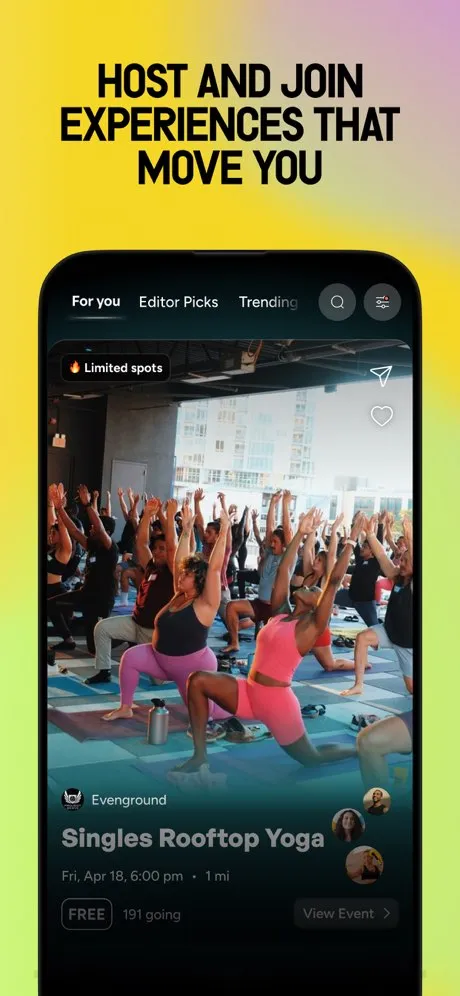
222: Download the app and complete a detailed personality quiz — it covers your interests, values, social style, and what kind of experiences you're into. 222 uses this to build a 'curation profile' that determines which events you get invited to and who you'll be grouped with. When an experience is available in your city, you'll get an invite — say yes, and you're in. On the night of, you show up to the venue and meet your group. The evening is planned for you: dinner, drinks, a venue, maybe a second stop. All you have to do is show up and be yourself.
Hank: Download the app and create a profile. Browse a calendar of local activities — walks, coffee meetups, happy hours, museum visits, book clubs, and more — happening near you or online. Join anything that catches your eye. Before the event, you can see other attendees' profiles and start a conversation. After the activity, stay connected with people you clicked with through in-app messaging. If you don't see the right activity, create your own — set the time, place, and description, and Hank handles the rest.
What to love
222: No profiles, no DMs, no swiping — removes all the friction and awkwardness of typical social apps. Personality-based matching means you're not just thrown in with random strangers. Full evening experiences (dinner + activity) feel like a real night out, not a forced meetup. All members are vetted before being selected for events. Strong TikTok community and word-of-mouth reputation in major cities.
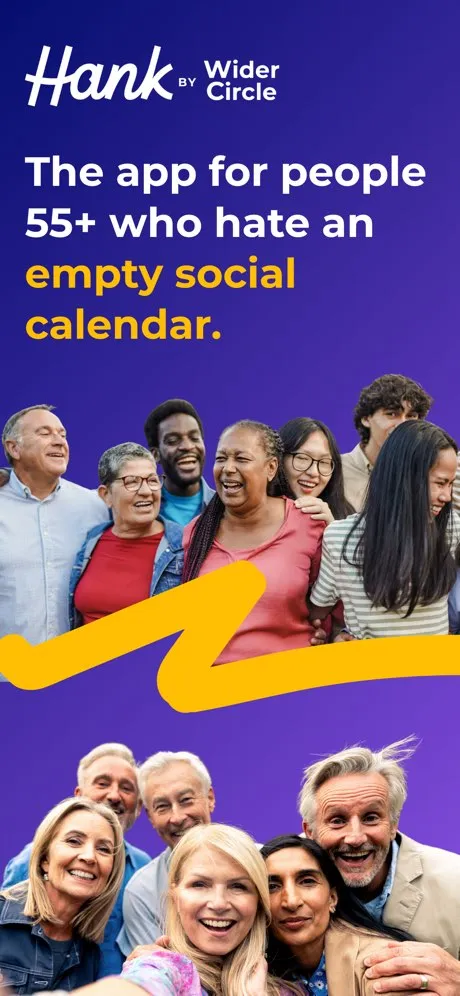
Hank: Purpose-built for 55+ — no competing with twenty-somethings or navigating dating-app mechanics. Completely free with no subscription walls or premium tiers. Both in-person and online activities mean you can participate regardless of mobility. You can host your own events, not just join existing ones. Clean, simple interface designed for accessibility.
Reality check
222: iOS only — no Android app available. Limited to a handful of US cities plus Toronto. Event costs add up on top of the free app. You can't choose who you go with — the algorithm decides.
Hank: Currently strongest in the New York area — thinner activity selection in other regions. No Android app yet (planned but not launched). Smaller user base compared to mainstream apps means fewer activities in less populated areas. No algorithmic matching — you browse and choose activities yourself.
Søren's take
On 222: 222 is one of the more interesting approaches to IRL social I've seen. By removing profiles and messaging entirely, they've eliminated the part of friendship apps that feels most like work. The personality matching and curated evenings mean you show up, meet cool people, and go somewhere fun — all without planning anything. The catch is availability: it's iOS-only and in just a few cities, so if you're not in NYC, LA, SF, or Chicago, you're out of luck for now. If you are, though, it's worth trying at least once.
On Hank: Hank fills a gap that's been wide open for years: most friendship apps are designed for people in their 20s and 30s, and the 55+ crowd has been left to figure it out on their own. Hank's approach is refreshingly straightforward — here's a calendar of things to do, go do them with people your age. No personality quizzes, no swiping, no algorithms. The free pricing is a big deal for this demographic. The main limitation is geographic reach — it started in NYC and is still building out — but if you're 55+ and looking for community, this should be on your phone.