An Honest Review of Closer (2026)
By Søren · Published 2026
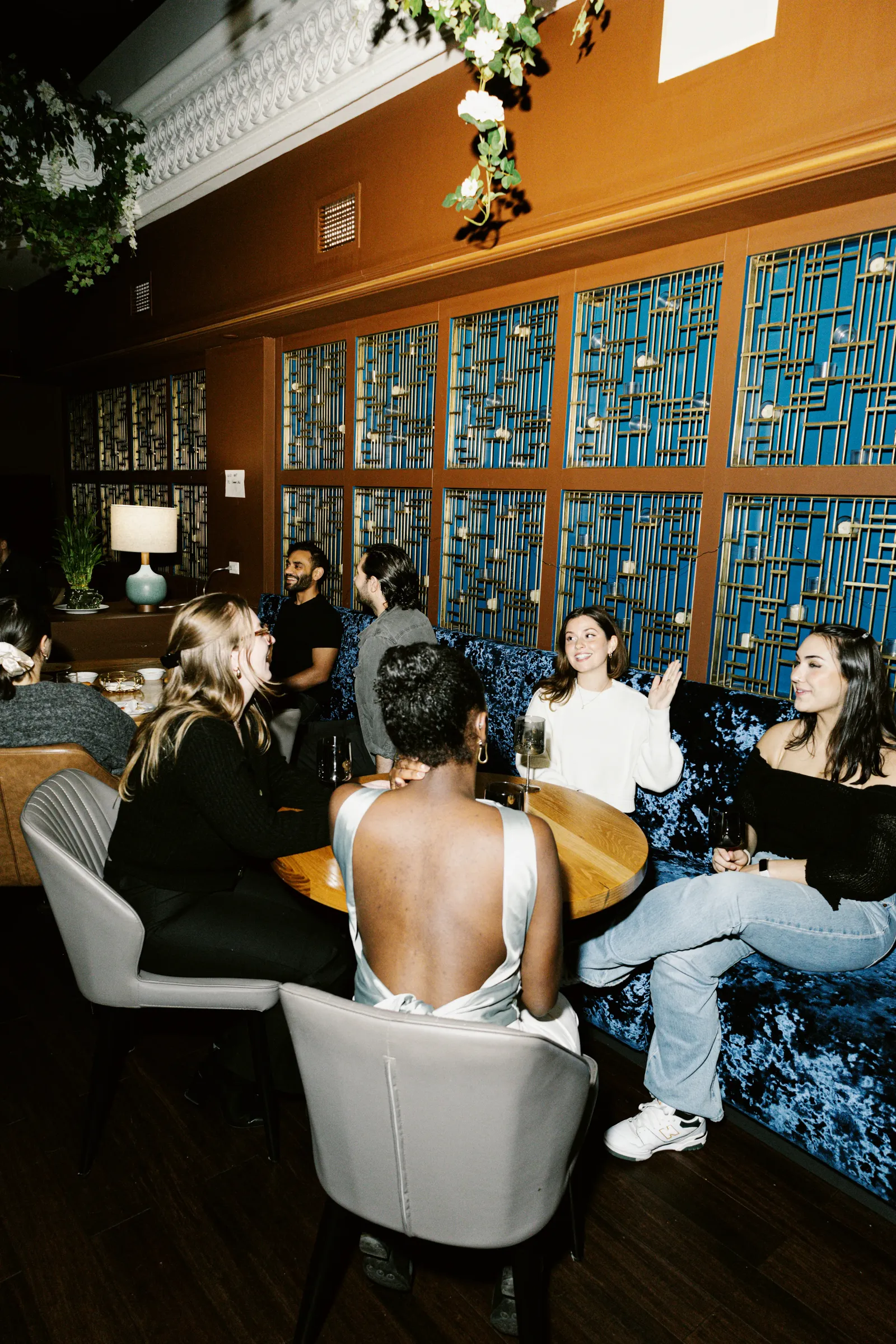
I found Closer through an Instagram reel that showed a group of strangers sitting around a table, laughing like old friends. The caption said something about "facilitated connection" and "phone-free events." I've been to enough awkward networking happy hours to be skeptical of anything that promises authentic human interaction, but the vibe seemed different. Less corporate. More living room.
Closer doesn't have an app. It's a website-only social club that hosts curated experiences — dinners, drinks, live jazz nights, yoga, home-cooked meals, even weekend getaways. You sign up online, pick an event, show up solo, and a facilitator guides the group through conversation. I went to a member dinner in the West Village. Here's the full breakdown.

How It Works
Head to becloser.co and create an account. The signup asks for your name, email, phone, and country. Your first three months of membership are completely free — after that it's $20/month, cancel anytime. There's also a $35 initiation fee that you pay at your first event, which covers your trial membership setup.
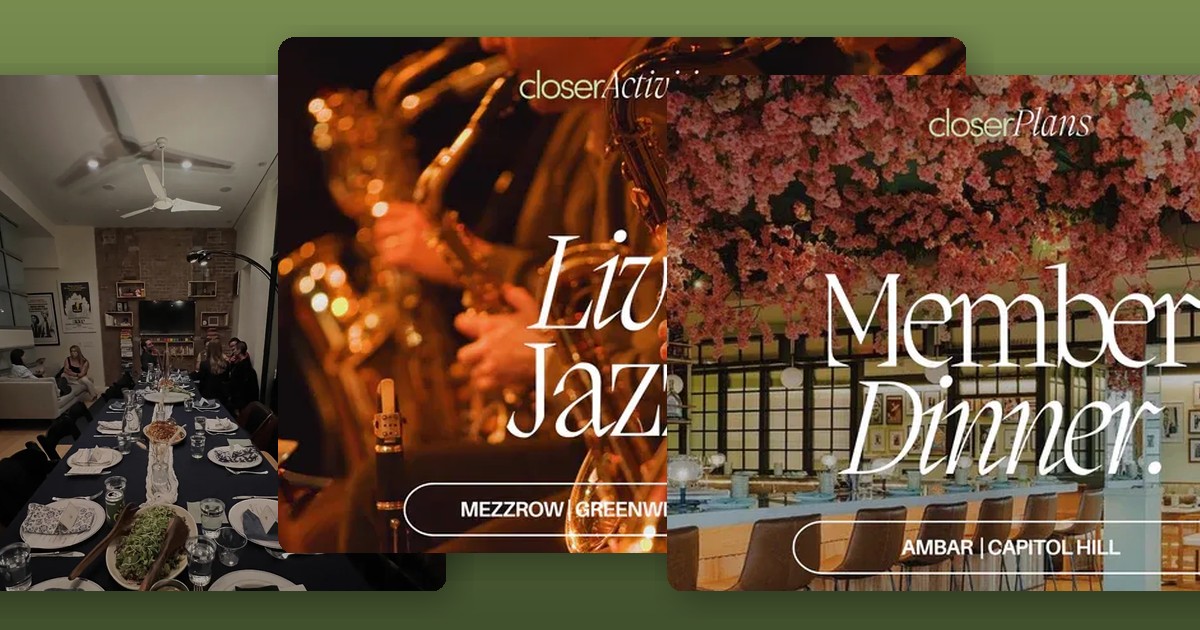
Once you're in, you browse upcoming experiences in your city. The night I went, there were about a dozen options across different categories: Closer Plans (general events), Closer Nights (evening outings), Closer At Home (intimate gatherings at someone's place), and Closer Trips (weekend getaways). I picked a member dinner at a small Italian restaurant. The event listing told me the time, the neighborhood, and that groups would be intentionally small. Everyone comes solo.
When you arrive, a facilitator introduces everyone and provides prompts for small group conversations. It's structured enough that you don't sit there in awkward silence, but loose enough that it doesn't feel scripted. No "go around the room and share a fun fact." More like thoughtful questions that naturally lead to real conversation.
What I Liked
The facilitation makes all the difference
This is what separates Closer from every other dinner club I've tried. At a Timeleft dinner, you sit down with strangers and hope the conversation flows. Sometimes it does, sometimes it stalls. At Closer, the facilitator provides a structure that reliably gets people past surface-level chitchat. The prompts aren't cheesy or forced — they're the kind of questions you'd ask a friend at 1 AM, not a stranger at a networking event. By the second round of prompts, people at my table were sharing real things. Career doubts. Relationship stuff. What they actually want from their life in this city. It felt vulnerable in a way that shouldn't have worked with strangers, but did.
The variety of experiences
Most social clubs do one thing: dinner. Closer has dinners, but also live jazz nights, sunset yoga and wine, cocktail hours at someone's apartment, singles nights, and weekend trips. That variety keeps it from getting stale. After my dinner, I was already browsing the jazz picnic in the park for the following weekend. Having multiple event types also means you can match your mood — sometimes you want a sit-down conversation, sometimes you want to move around.
Everyone comes solo
This sounds like a small detail, but it changes everything. At most social events, half the room arrives with a friend and sticks to their bubble. At Closer, everyone is in the same position: alone, slightly nervous, open to meeting people. That shared vulnerability creates an immediate bond. Nobody is the odd one out because everyone is the odd one out.
The three-month free trial is generous
Three months is a long time to try something before paying. Most social apps give you a week, maybe a month. Closer gives you an entire season to attend events, see if the community fits, and decide if it's worth the $20/month. That confidence in their product is a good sign.

What I Didn't Like
The initiation fee is an awkward surprise
The $35 initiation fee at your first event caught me off guard. The website mentions it, but not prominently. You sign up thinking everything is free for three months, then learn there's a one-time fee before you even attend your first gathering. It's not a dealbreaker — $35 for three months of events is still a good deal — but the framing feels a little bait-and-switch. Just be upfront about it.
Limited to eight cities, and most aren't on the map yet
Closer operates in New York, DC, Denver, London, Toronto, Montreal, Sydney, and Melbourne. If you're not in one of those cities, you're out of luck. And even within those cities, the number of events varies. New York has 20+ events a month. Smaller markets probably have far fewer. This is the classic social club scaling problem — the experience is only as good as the density of your local community.
No matching algorithm means luck of the draw
Unlike Timeleft or 222, which use personality quizzes to match your table, Closer groups are based on whoever signed up for that specific event. My group clicked, but there's no algorithmic safety net ensuring compatible conversation partners. If the facilitator is good, this matters less — but it's still more random than platforms that actively curate your table.
The cancellation penalties
Cancel within 48 hours of an event and you're hit with a $10 fee. No-show and it's $20. I understand why — no-shows ruin small group dynamics. But for a platform that's supposed to feel warm and welcoming, financial penalties create an undercurrent of anxiety. Life happens. Sometimes you can't make it. $20 for not showing up to a social event feels punitive.
Who Should Try Closer
If you're in New York, DC, Denver, or one of their international cities and you want more than just "dinner with strangers," Closer is worth trying. It's particularly good for people who've done the Timeleft thing and want something more facilitated, more varied, and more intentional. The fact that you can try yoga one week, a dinner the next, and a jazz night the week after keeps the experience from feeling repetitive.
Skip it if you want algorithmic matching, if you're not in one of their cities, or if the idea of facilitated conversation prompts makes you cringe. Some people prefer the unstructured spontaneity of a regular dinner party. Closer is more guided than that, and if you fight the structure instead of leaning into it, you probably won't enjoy it.
The Verdict
Closer gets something right that most social platforms miss: the facilitation. Having someone guide the conversation with thoughtful prompts — not icebreaker games, not "two truths and a lie" — creates a level of depth that doesn't usually happen between strangers on a first meeting. The people at my table talked about things I wouldn't expect to hear until a third or fourth hangout. That's rare.
The platform is still young and still small. Eight cities, website-only, no matching algorithm. But the human-first approach — real facilitators, small groups, varied experiences — makes it feel more like joining a community than using a product. The three-month trial gives you plenty of time to see if the vibe fits. My suggestion: sign up, pick a dinner, and go in with zero expectations. The facilitation will do the rest.