An Honest Review of Clockout (2026)
By Søren · Published 2026
I'd been seeing Clockout pop up on TikTok and Instagram for months — the kind of sleek marketing that promises "networking redefined" and "ambition meets play." It sounded like what every twenty-something professional wants: a way to meet ambitious people without the stiffness of a LinkedIn event or the randomness of a bar. When I found out they were backed by Evite and had 400,000+ downloads, I figured this wasn't just another networking app that would ghost me after onboarding.
The catch: Clockout has a waitlist. They claim to accept about 10% of applicants, which immediately gave me Raya flashbacks. But a friend who was already on it sent me an invite code, and I skipped the line. Within a day I had a profile, was swiping through professional intros, and had RSVP'd to a rooftop mixer in Manhattan. Here's what actually happened.
For context: I'm in my late twenties, work in media, and live in New York. I'm not looking for a cofounder or investor — I just wanted to meet interesting people my age who are doing something with their careers. That felt like exactly who Clockout was marketing to.

How It Works
Download the app and create a profile. You'll add your job title, industry, a short bio, and a few photos. Then you submit your application. Clockout's "concierge team" reviews every profile — or, if you have a friend already on the app, their invite code gets you in faster. The referral mechanic is clever but also a little aggressive: to fully activate your account, you're encouraged to refer four people. That felt like a growth hack disguised as a feature.
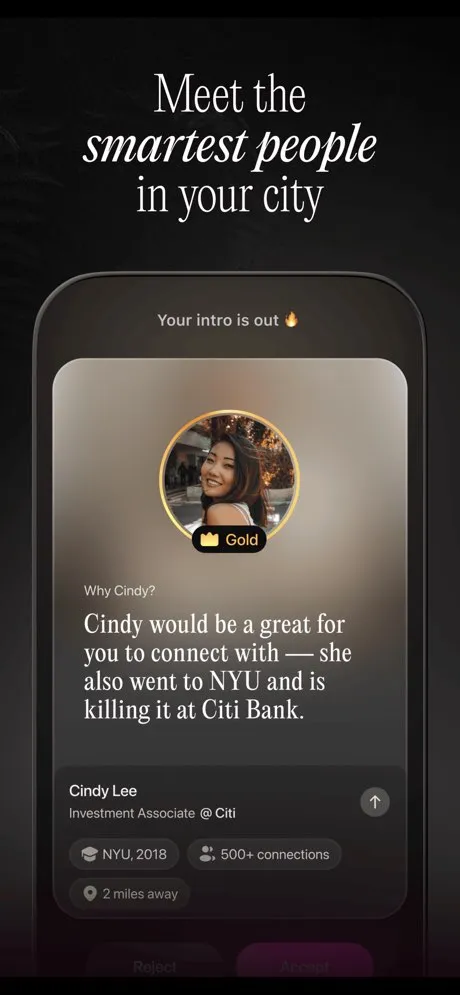
Once you're in, there are three main things to do. First, browse and swipe on professional profiles — the AI recommends people based on your industry and goals, and if you both swipe right, you can message. Second, explore clubs — there are thousands of interest-based groups covering everything from fintech to food photography. Third, RSVP to events: mixers, galas, brunch clubs, and social hours organized through the app. Events cost $2 per RSVP on top of whatever the venue charges. The Clockout Gold subscription ($8-28/month depending on plan) unlocks premium features like unlimited swipes and priority event access.
What I Liked
The events actually had energy
The rooftop mixer I attended had maybe 60 people, mostly mid-twenties, and the vibe was genuinely good. It wasn't the stiff name-tag energy of a traditional networking event. People were actually talking to each other — about their startups, side projects, weekend plans. The Clockout team had set up a few ice-breaker stations and a drink special, which helped. It felt like a good house party where everyone happens to be ambitious.
The community groups are surprisingly active
With 4,500+ clubs, I expected most to be ghost towns. But the ones I joined — a media/content group and a general NYC social club — had regular posts, event coordination, and genuine conversation. It reminded me of early Facebook groups, before everything became spammy. The clubs give Clockout a stickiness that pure matching apps like Bumble BFF lack.
The AI intros felt targeted
The matching engine recommended people who were actually in adjacent industries and at a similar career stage. Not every suggestion was a hit, but the baseline relevance was higher than what I'd get on LinkedIn's "People You May Know." When a match did click, the in-app messaging felt natural — more like texting than professional correspondence.
The gamification is fun without being annoying
Clockout has streaks, milestones, and rewards for staying active. Normally I roll my eyes at gamification in professional tools, but here it works — it nudges you to keep showing up and engaging without feeling like Duolingo guilt. The streaks actually motivated me to check the app daily during my first week.

What I Didn't Like
The pricing is death by a thousand cuts
Clockout is technically free to join, but the real experience requires spending. Gold subscription runs $8-28/month. Every event RSVP costs $2 on top of whatever the event itself costs. If you're active — attending two events a week, using premium features — you could easily spend $50-80/month. That's approaching Base territory without Base's curation. The pricing model feels designed to extract maximum revenue from engaged users rather than offer clear value at a single price point.
The "10% acceptance rate" claim feels inflated
Multiple reviews (including critical ones on the App Store) question whether the vetting is as selective as Clockout claims. You can skip the waitlist entirely with a friend's invite code, and the referral requirement means every accepted member is incentivized to bring four more people in. The result: the membership quality is uneven. I met some genuinely impressive people at the mixer, but also quite a few who seemed to be early in their careers or still in school. That's fine — everyone starts somewhere — but it doesn't match the "exclusive professional network" marketing.
Heavily skews young
If you're over 30, you might feel out of place. Clockout markets itself to "Gen Z+" professionals, and the user base reflects that. Most people I encountered were 22-27. For someone in their late twenties, that was mostly fine. But if you're a 35-year-old director looking for peer-level connections, you'll probably find more of your people on Hampton or InterNations.
New York gets the most love
Clockout claims nationwide availability, but the density of events and active users drops off dramatically outside major metros. New York had multiple events per week. Friends in smaller cities reported seeing one or two events a month, if that. The app technically works everywhere, but the experience is very different depending on where you live.
Who Should Try Clockout
If you're in your early-to-mid twenties, live in a major city (especially New York), and want to meet ambitious people without the corporate energy of traditional networking, Clockout is worth downloading. It's especially good for recent graduates who are building their professional circle from scratch, or anyone who wants the social side of networking — the brunches, rooftop mixers, and interest-based clubs — without the transactional LinkedIn vibe.
Skip it if you're over 30 and want peer-level professional connections, if you're in a smaller city with limited events, or if the layered pricing bothers you. Also skip it if you're allergic to referral mechanics — the push to invite four friends to activate your account might rub you the wrong way.
The Verdict
Clockout is doing something genuinely interesting for young professionals: combining the matching intelligence of a dating app with the community structure of a social club and the event calendar of a nightlife app. When it works — and at that rooftop mixer in Manhattan, it really worked — it feels like the future of professional networking for people who'd rather meet over cocktails than cold emails.
But the execution has rough edges. The pricing is fragmented and adds up fast. The selectivity claims don't fully hold up under scrutiny. And the experience outside New York is hit-or-miss. Clockout feels like a platform that's growing into its ambition — the bones are good, the community is real, but it's not yet the polished, premium experience the marketing suggests.
My advice: download it, skip the Gold subscription at first, RSVP to one event, and see who shows up. If the people in your city are the kind of people you want to know, invest more. If the events are sparse or the crowd doesn't match the promise, you've spent $2 and learned something. For Gen Z professionals in major cities, it's one of the better options out there — just go in with realistic expectations about what "exclusive" actually means here.