An Honest Review of Hampton (2026)
By Søren · Published 2026
I'd been hearing about Hampton for a while — mostly from founders on Twitter who'd post something vague like "just had the best Hampton Core session" without ever explaining what that meant. It felt like one of those things where the exclusivity is the marketing. So when a friend who runs a SaaS company told me he'd joined and that it was "the only professional community that's ever been worth the money," I figured it was time to see for myself.
The application process alone tells you this isn't your average networking group. I submitted my info, did a structured interview that felt more like a conversation than a pitch, and waited. About three weeks later, I got the acceptance email. Then came the sticker shock — Hampton doesn't publish pricing, and I won't break their confidence, but let's just say this is a serious annual investment. I paid, got access to the Slack community immediately, and was told my Core group placement would come within 90 days.
Three months later, I walked into my first Core meeting — eight founders around a table in a private room, no phones, no pitches, just structured conversation about what we're all actually going through. Here's what I found.

How It Works
Hampton has three layers. The foundation is your Core group — eight founders curated using what they call the "Mirror, Mentor, Mentee" model. The idea is that your group includes people at your stage (mirror), people a step ahead who can advise (mentor), and people a step behind who you can help (mentee). You meet in person ten times a year, facilitated by a trained moderator. Sessions follow a structured format: personal updates, a deep-dive on one member's challenge, and group problem-solving.
On top of that, there's your local Chapter — city-based events like dinners, workshops, and what they call "signature experiences." Each city has a dedicated City Lead who organizes everything. And then there's the Network — a private Slack with 1,000+ members organized by topic, where you can ask anything from "what payroll provider do you use" to "how do you deal with founder loneliness."
What I Liked
The Core group model creates real trust
This is the thing that separates Hampton from every other founder community I've tried. When you see the same eight people ten times a year, in person, with a facilitator keeping the conversation honest — you build the kind of trust that doesn't happen at conferences or in Slack channels. By my second meeting, people were sharing things about their businesses and personal lives that they'd never say in a public forum. Revenue numbers, equity struggles, marriage stress from the company. It's the opposite of the curated founder persona you see on LinkedIn.
The no-solicitation policy is enforced
Hampton has an escalating enforcement policy for anyone who tries to sell within the community: nudge, warning, removal. And it works. In four months, not a single person has pitched me on anything. Compare that to literally every other founder group I've been in, where half the members are there to find clients. The result is that conversations are genuinely helpful instead of transactional.
The Slack network is surprisingly useful
I expected the digital community to be an afterthought, but it's actually where I've gotten the most tangible value. I posted a question about negotiating an office lease and had three people who'd done it respond within an hour — with specific numbers, landlord names, and contract clauses to watch for. That kind of operational knowledge would've taken me weeks of Googling and cold outreach to find.
The people are the product
With an ~8% acceptance rate and minimum thresholds of $3M revenue, $3M raised, or a $10M+ exit, you're not going to be sitting across from someone who's "thinking about starting something." Every person at my Core table was actively running a real business. The average member company does $23M in revenue. That caliber of peer is hard to find anywhere else.

What I Didn't Like
The pricing opacity feels intentional
You cannot find out what Hampton costs without applying and going through the interview process. I understand the reasoning — they don't want price to be the first filter — but it also means you invest real time in an application before knowing if you can afford it. For a community that prides itself on transparency and candor, the pricing secrecy feels contradictory.
The eligibility bar locks out early-stage founders
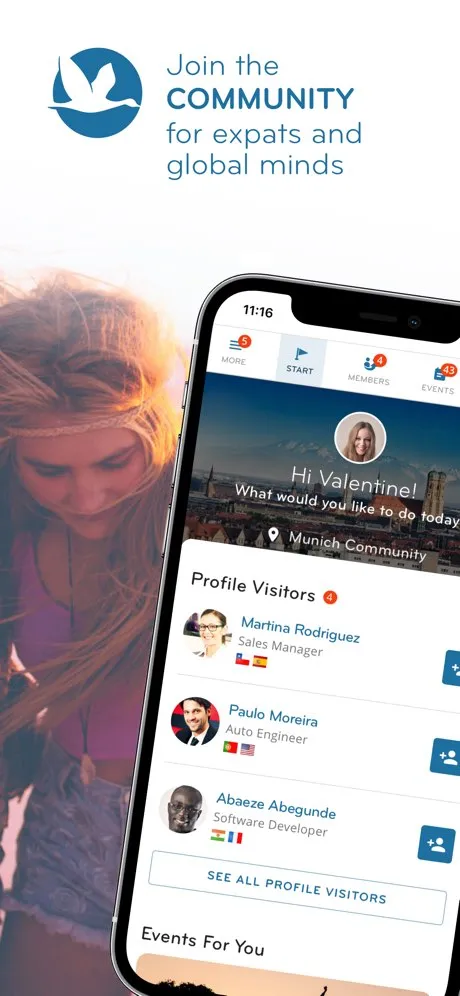
If you're pre-revenue or just getting started, Hampton isn't for you. The $3M minimum is firm. I know several founders doing genuinely impressive work at the $500K-$2M range who'd benefit enormously from this kind of peer group but can't get in. Hampton would argue this protects the community's quality, and they're probably right — but it does mean the people who might need peer support the most are excluded. If you're earlier-stage, check out Closer or InterNations for more accessible communities.
90 days to start is a long wait
After paying a substantial annual fee, I waited three months for my Core group placement. During that time I had Slack access and some chapter events, but the real value proposition — the Core group — wasn't available. For what you're paying, that's a long runway before you see the main benefit.
City availability is limited
Hampton operates in 16 cities — 13 in the US plus London, Toronto, and Vancouver. If you're not in one of those cities, you simply can't join. There's no remote option for Core groups (they're in-person only), which is both a strength and a limitation depending on where you live.
Who Should Try Hampton
Hampton is for tech founders and CEOs who have already built something meaningful and feel isolated at the top. If you're doing $3M+ in revenue, you've probably outgrown the local startup meetups and generic networking events. You need people who understand what it's like to manage a board, navigate a down round, or figure out whether to sell. That's what Hampton provides — and the in-person, structured format creates accountability that online communities can't match.
Skip Hampton if you're early-stage, bootstrapping to your first $1M, or looking for casual social connections. This is a professional commitment — both financially and in terms of time (~3 hours/month for Core alone). It's also not for people who are primarily looking to find clients or investors. The no-solicitation policy means this is a give-first community. If you're looking for a deal flow, look elsewhere.
The Verdict
Hampton is the most serious founder community I've encountered. The Core group model is genuinely different from anything else out there — it's not a mastermind, it's not a networking event, and it's not a Slack group. It's eight people who see each other regularly enough to build real trust, facilitated by someone who keeps the conversation productive. The ~8% acceptance rate and strict requirements mean the people in the room are all operating at a high level.
The catch is obvious: this is expensive, opaque about pricing, and exclusive by design. If you don't meet the revenue threshold or don't live in one of their 16 cities, there's nothing for you here. And even if you do qualify, you're making a bet that the long-term value of these relationships will justify the annual cost before you've met a single member.
For the founders it serves, Hampton is probably worth it. The peer accountability, the operational knowledge, and the genuine relationships are hard to replicate anywhere else. But go in with realistic expectations — this isn't a magic networking solution. It's a commitment to showing up, being vulnerable with a small group of strangers, and trusting the process. If that sounds like what you need, apply. Just know what you're getting into.