
Amata vs WasMeant
Amata is a dating app and WasMeant is a friendship app. They take different approaches to helping you meet people IRL — here’s a detailed comparison.
Side-by-side comparison · Updated 2026
At a glance
Pricing
Amata is priced at Free (Free to download, premium plans likely available), while WasMeant comes in at $$ (~$19 per dinner ticket + cost of your meal).
Format & matching
Amata uses groups of 1:1, compared to WasMeant’s 4 per table, and both use algorithm-based matching.
How they work
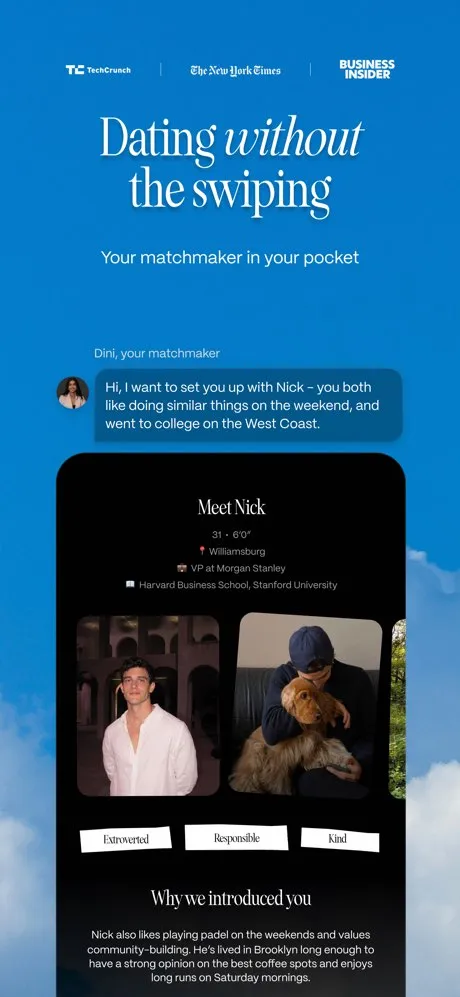
Amata: Download the app and start a conversation with your AI matchmaker. It asks about your lifestyle, values, what you're looking for, and what you're not — building a real picture of who you are beyond a photo grid. When the AI finds someone it thinks is a strong fit, it introduces you both. If you're both interested, Amata handles the logistics: it checks your availability and books a table at a curated restaurant. You show up, have the date, and then debrief with your AI afterward. Every piece of feedback sharpens future matches.
WasMeant: Head to wasmeant.com and create an account. You'll fill out a personality questionnaire covering your interests, values, and social energy — takes about 10 minutes. Once your profile is complete, purchase a one-time dinner ticket ($18.99). Then pick which Friday dates work for you and start the group search. WasMeant's algorithm builds a balanced group of four people with compatible personalities. You'll get the restaurant name and details by email once your group is confirmed — usually 24 hours before. Show up Friday at 7 PM, sit down, and spend the evening with three strangers at a curated spot in Manhattan, Brooklyn, or Williamsburg.
What to love
Amata: The AI matchmaker learns from every conversation and date, getting smarter over time. Eliminates the worst parts of dating apps: swiping, small talk, and ghosting. Handles all the logistics — availability, restaurant booking, everything. Feels more like being set up by a friend than using an app. Focus on intentional dating filters out people who aren't serious.
WasMeant: Algorithmic matching based on a real personality questionnaire — not random groupings. Small groups of four keep conversations intimate and comfortable. No app download required — sign up and manage everything on the website. Pay-per-dinner model with no subscription or auto-renewal. Restaurant selection is curated for atmosphere, not hype.
Reality check
Amata: iOS only — no Android or web app yet. Limited to NYC, Sydney, and Melbourne for now. Relies heavily on AI judgment, which won't always get it right. Small user base compared to mainstream dating apps means fewer potential matches.
WasMeant: NYC only — if you're not in New York, you're out of luck. Friday-only schedule at 7 PM is rigid if your weekends are unpredictable. Ticket price covers coordination only — you still pay for your own meal and drinks. Relatively new platform, so the matching pool may be smaller than established competitors.
Søren's take
On Amata: Amata is doing something genuinely different in a space that badly needs it. Instead of handing you a deck of profiles to swipe through, it acts like a matchmaker who actually listens. The AI conversation approach is smarter than a personality quiz — it picks up on nuance. The fact that it books the date for you removes so much friction. The catch is availability: with only three cities and an iOS-only app, your dating pool is limited. But if you're in one of those cities and you're done with swipe culture, Amata is worth trying.
On WasMeant: WasMeant feels like the scrappy, NYC-native answer to Timeleft. The premise is nearly identical — personality-matched dinners with strangers — but the execution is more intimate: groups of four instead of six, and a deliberate focus on one city done well rather than scaling everywhere at once. The Friday-at-7-PM ritual is a nice counterpoint to Timeleft's Wednesday format. The biggest limitation is obvious: it's NYC only. But if you live in New York and want a low-pressure way to meet genuinely interesting people over dinner, this is worth a ticket.