happn vs Pie
happn is a dating app and Pie is a friendship app. They take different approaches to helping you meet people IRL — here’s a detailed comparison.
Side-by-side comparison · Updated 2026
At a glance
Pricing
Both happn and Pie fall in the Free price range. happn: Free with optional Premium subscription (~$25/month). Pie: Completely free — no subscriptions, no paywalls.
Format & matching
happn uses groups of 1:1, compared to Pie’s Varies, and happn relies on algorithm-based matching while Pie uses interest-based matching.
How they work
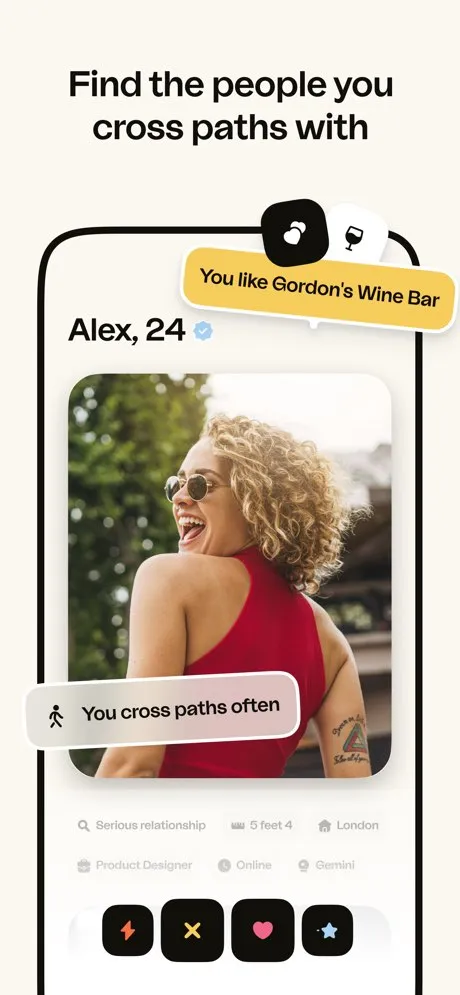
happn: Sign up and create a profile with your photos and interests. As you go about your day, happn uses your location to detect when you cross paths with other users. Those people appear in your timeline with the time and approximate location of the crossing. If someone catches your eye, tap the heart to secretly like them. If they like you back, it's a Crush and you can start chatting. You can also send a SuperCrush to notify someone directly that you're interested.
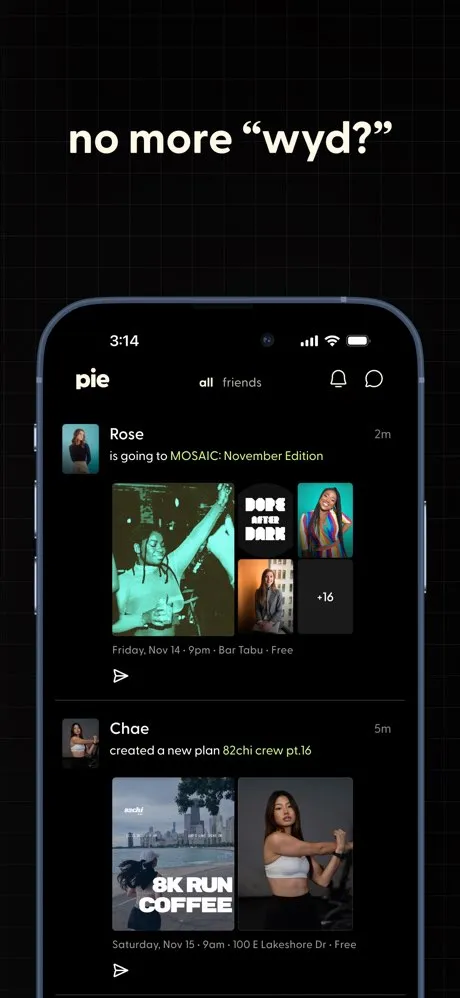
Pie: Download the app and set your city — Pie is live in Chicago, Austin, Bay Area, and Columbus. Your home feed shows free, in-person events happening nearby, filtered by your interests. Tap an event to see who's going, RSVP, and add it to your calendar. After you attend, Pie starts learning who you vibe with and surfaces a personalized feed of friend and friend-of-friend activity. You can also host your own events — keep them private or broadcast them to the whole network using 'snowball mode.' There's a built-in chat for coordinating plans and sharing photos after the fact.
What to love
happn: Location-based crossing makes matches feel more organic and realistic. 140+ million users worldwide gives you a massive pool in most cities. The Crush system means you only chat with mutual matches — no unwanted messages. Free tier is genuinely usable, not just a teaser. Available globally, not locked to specific cities.
Pie: Completely free — no premium tier, no paywalls, no catch. Event-first model means you're bonding over shared experiences, not forced small talk. The friend-of-friend feed creates organic social discovery that feels natural. You can host your own events, giving you control over the vibe. 4.7-star rating with 1,000+ reviews suggests people genuinely love using it.
Reality check
happn: Effectiveness depends heavily on population density — suburban and rural users will struggle. The location tracking can feel creepy if you're not comfortable sharing your movements. Premium pricing is steep for what you get compared to competitors. Profile depth is limited — you're mostly judging by photos and crossing frequency.
Pie: Only available in four cities — if you're not in Chicago, Austin, Bay Area, or Columbus, you're out of luck. No algorithmic matching — you have to browse and choose events yourself. Event quality depends on what's happening in your area on any given week. As a PBC (Public Benefit Corporation), long-term monetization strategy is unclear.
Søren's take
On happn: Happn's core idea is genuinely clever: instead of showing you thousands of strangers, it surfaces the people you've already been near in real life. In a dense city, this creates a dating pool that actually makes logistical sense. The problem is that the concept works best where it's needed least — in big cities where you already have plenty of dating options. In smaller towns, your timeline might be a ghost town. If you live in a major metro and want to stop matching with people 45 minutes away, happn is worth a download alongside your main dating app.
On Pie: Pie is refreshingly simple in a space full of personality quizzes and subscription paywalls. The pitch is: here are free events near you, go to them, meet people. That's it. No matching algorithm, no premium tier, no gamification. The friend-of-friend social graph that builds over time is genuinely clever — it mimics how real-life social circles actually form. The catch is geographic: four cities is a small footprint, and if yours isn't on the list, you're waiting. But if you're in Chicago, Austin, or the Bay Area and want a zero-cost way to build a social life, Pie is the obvious first download.